Metal Building Insulation in Noblesville, IN
Stop condensation and temperature swings in metal structures with direct-to-panel spray foam.
Metal Building Insulation
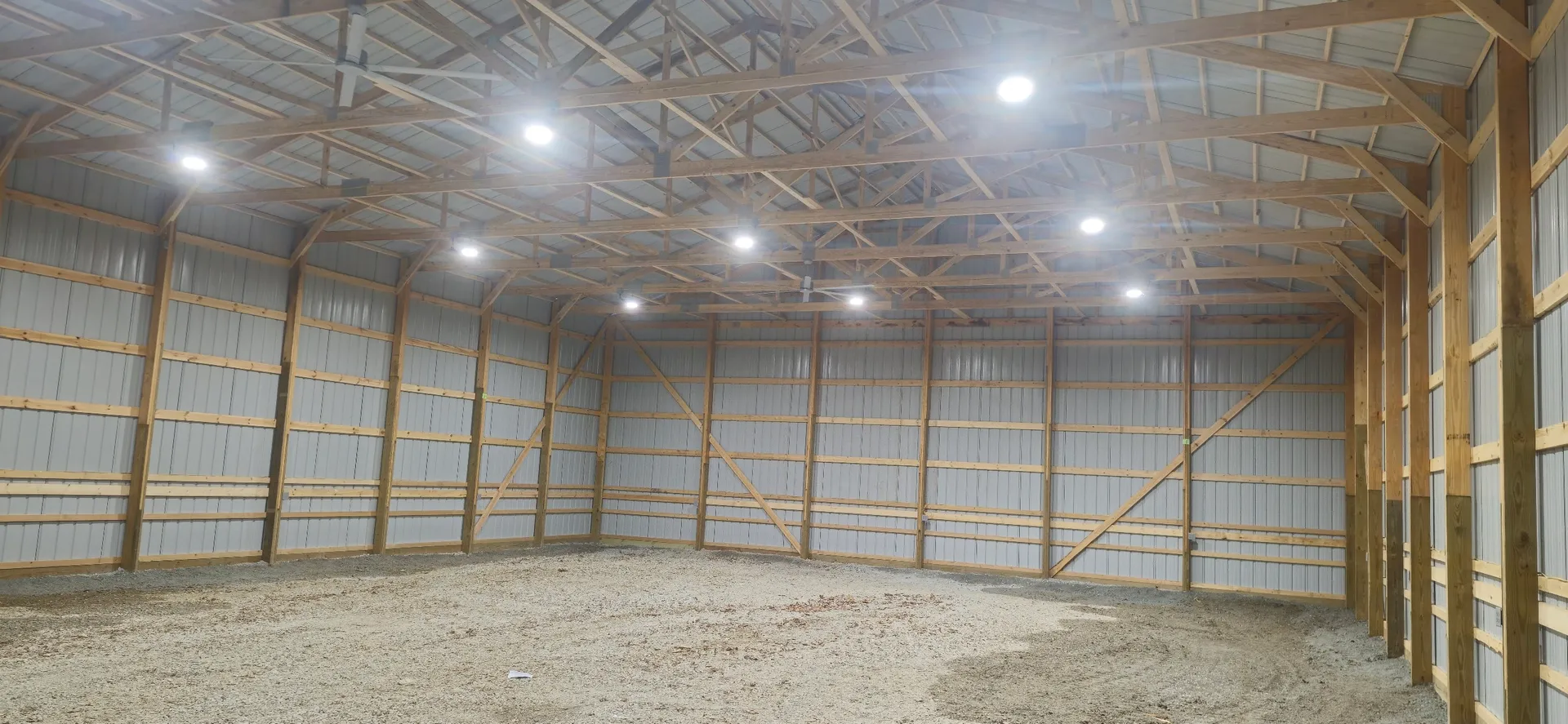
Metal buildings in Indiana face extreme temperature swings and condensation problems. We spray closed-cell foam directly onto metal panels. The foam creates a thermal break: no more dripping condensation, protection against interior moisture that causes corrosion, and stable temperatures year-round.
- Stop condensation dripping
- Prevent rust and corrosion
- Stable temperatures year-round — no more hot-cold swings
- Direct application to metal panels
Steel buildings condense for a simple reason: warm interior air touches a metal panel that is colder than the dew point, and water forms on the steel. It drips off purlins onto inventory, rusts fasteners and girts, and shows up worst on spring mornings when the panels are cold and the air inside is damp. Shops, warehouses, and equipment buildings all get the same problem.
The standard fix — fiberglass blanket pinched between the purlins and the panel — fails exactly where it matters. Compressed at every steel member, the blanket loses most of its R-value right at the thermal bridge, and it does nothing to air-seal panel seams or screw penetrations.
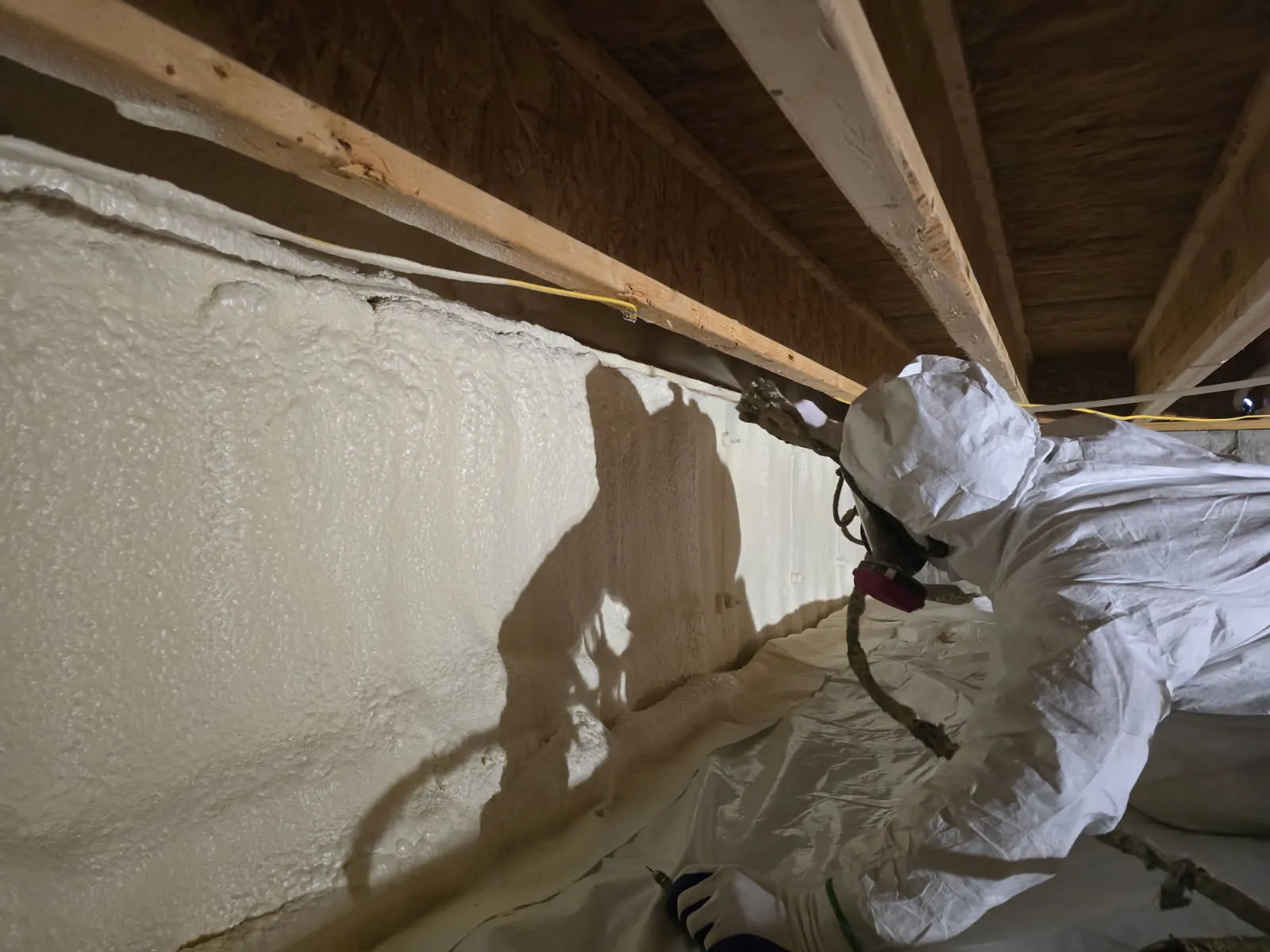
Closed-cell spray foam works differently. Applied directly to the panels, it keeps the steel surface above the dew point so condensation never forms, air-seals every seam and fastener in the same pass, and acts as a vapor retarder at roughly R-6.5 per inch. It also stiffens the panel-to-frame assembly — a real secondary benefit on a building that flexes in wind.
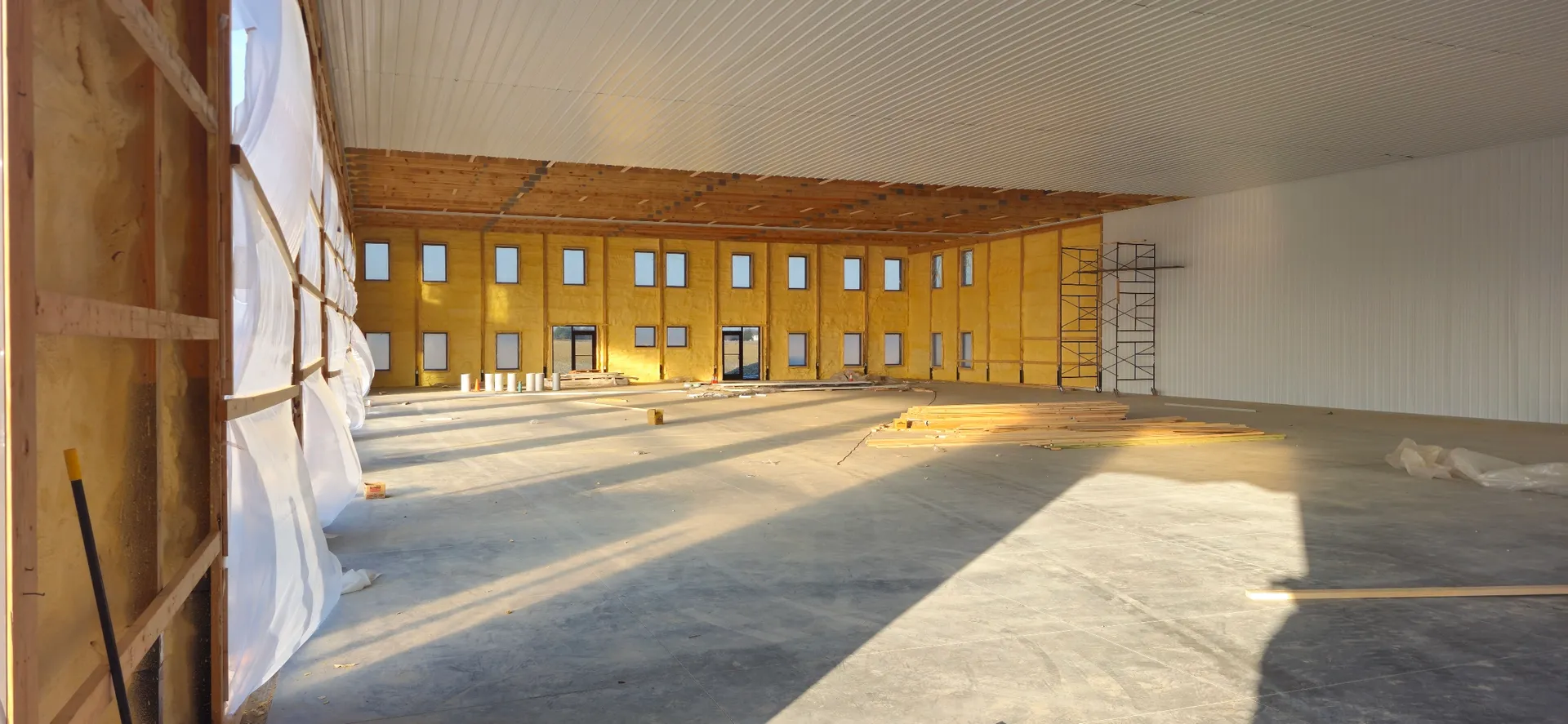
We insulate steel-framed shops, warehouses, ag buildings, and pre-engineered metal buildings across Central Indiana. Closed-cell foam starts at $1.25–1.40 per board foot; use the cost calculator for a working number, or text us the building size and how you use it.
Why metal buildings drip
Condensation on a metal building is a dew point problem, not a leak. Warm, humid interior air reaches the cold steel panel, the panel surface sits below the dew point, and water condenses right there — then drips onto whatever is below. Left alone it corrodes fasteners, streaks walls, and keeps stored equipment wet through every spring thaw.
Foam applied to the panel changes the surface the air touches. With closed-cell foam on the steel, the interior face stays near room temperature, above the dew point, and the dripping stops. The same layer closes off the panel seams, laps, and screw penetrations that leak air year-round.
- Panels stay above the dew point, so condensation stops
- Air-sealed seams, laps, and fastener penetrations
- Vapor retarder and insulation in one application
- Drier steel, drier inventory, drier floors
Steel frame or post frame?
Steel-framed buildings and wood post-frame pole barns condense the same way, but the assemblies differ. A pre-engineered metal building carries its panels on steel purlins and girts, which bridge heat aggressively and rule out most cavity insulation. A pole barn hangs steel on wood girts between posts, with open volume behind. Both get the same fix — closed-cell foam sprayed to the back of the panels — but access, thickness, and scope are planned differently.
If your building is a wood post-frame barn, the pole barn insulation page covers that assembly in more detail. Either way, the conversation starts with how you use the building: heated shop, cold storage, equipment, or animals.
Related resources
Related Services
Get Your Free Quote
Serving Central Indiana
NoblesvilleBrownsburgCarmelFishersGreenwoodIndianapolisLafayetteMuncieWestfieldZionsvilleAndersonAvonCrawfordsvilleDanvilleFrankfortGreenfieldKokomoLebanonMooresvilleMulberryPendletonRossvilleSheridanThorntownBoone CountyClinton CountyHamilton CountyHancock CountyHendricks CountyHoward CountyJohnson CountyMadison CountyMarion CountyMorgan County