Crawl Space Insulation
Crawl space pages that connect moisture control, closed-cell foam, and residential retrofit planning.
Seal out moisture, pests, and cold floors with closed-cell foam applied directly to crawl space walls.
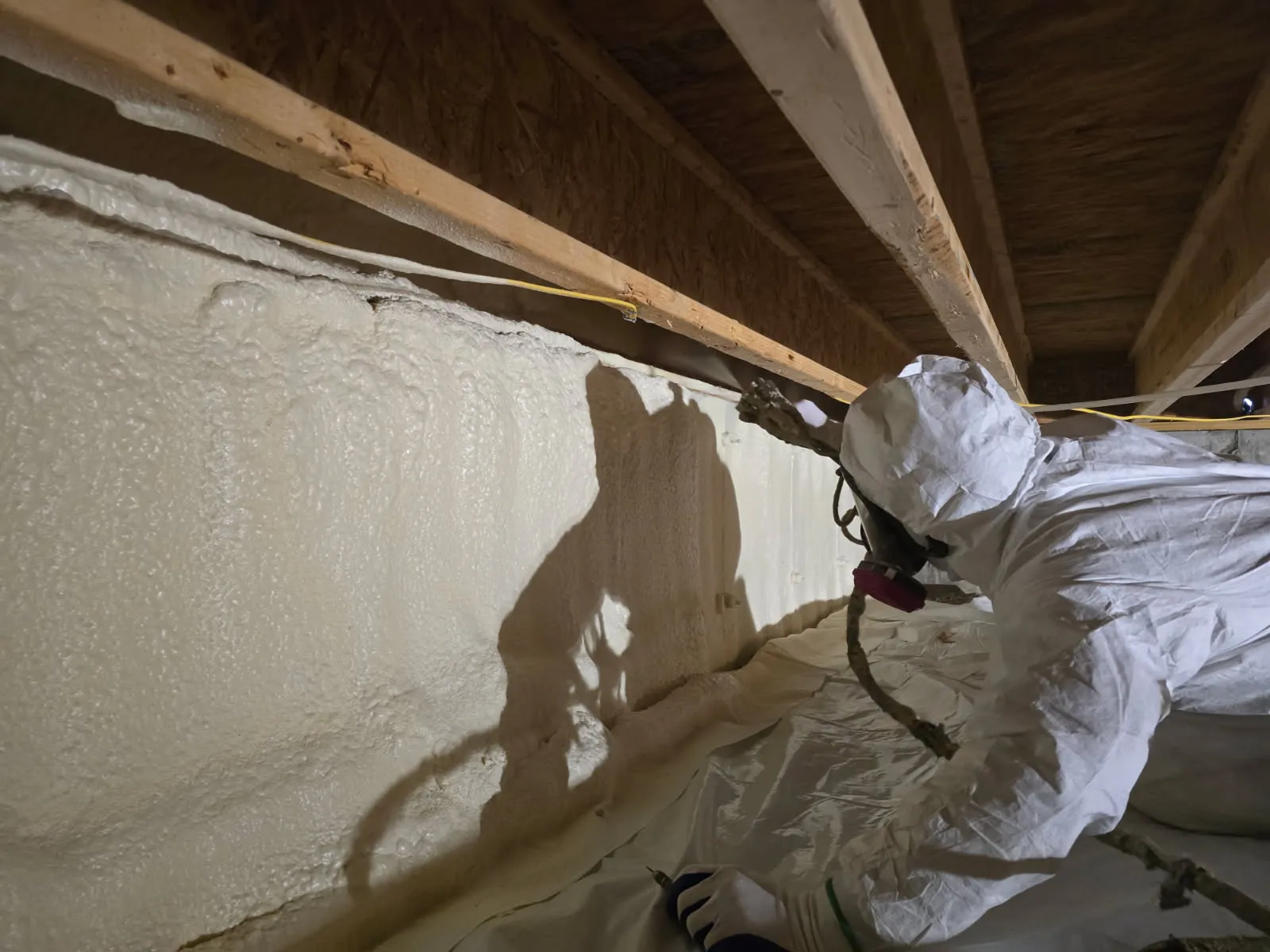
A wet, vented crawl space is one of the biggest hidden problems in a Central Indiana home. Moisture breeds mold. Mold degrades the air in your living space. And open vents invite pests underneath your floors. We spray closed-cell foam on the walls and rim joist, seal the vents, and lay a vapor barrier on the floor. Dry space, fresher air, warmer floors, lower energy bills.
Central Indiana homes with crawl spaces face a common problem: moisture. The combination of clay-heavy soil, seasonal humidity, and older vented crawl space designs creates an environment where moisture accumulates, mold grows, and the air quality in your living space suffers. You might notice musty smells, cold floors in winter, or higher-than-expected energy bills.
Our crawl space insulation and encapsulation process addresses all of these issues. We spray closed-cell foam directly onto the crawl space walls and rim joist, creating a continuous thermal and moisture barrier. We seal any open vents (which are now recognized as a source of moisture problems, not a solution), and we lay a heavy-duty vapor barrier on the floor.
The result is a dry, conditioned crawl space that no longer sends cold air, moisture, or musty smells into your home. Floors feel warmer in winter. Energy bills drop. And the sealed environment deters pests and rodents that previously had easy access.
Closed-cell foam is the only practical choice for crawl spaces because of its moisture resistance. At R-6.5 per inch, just 2 inches on the walls provides R-13 — meeting current Indiana energy code — while simultaneously acting as a vapor barrier.
A typical crawl space encapsulation for a 1,500 sq ft home runs approximately $3,800 including spray foam, 6 mil plastic, and full encapsulation. Call for a free assessment of your crawl space.
Crawl spaces in Noblesville and the surrounding Central Indiana towns are usually moisture problems before they are insulation problems. Clay soil, vented crawl space designs, rim joist gaps, plumbing penetrations, and exposed block walls let humid air and cold air move through the floor system.
That is why closed-cell foam is the usual recommendation. It adds insulation and moisture control in the same pass, especially on block walls and rim joists where fiberglass tends to sag, hold moisture, or pull away from the surface.
A crawl space quote should not be guessed from square footage alone. We look for standing water, pest damage, open vents, ductwork, plumbing, foundation material, access height, and whether the floor needs a vapor barrier. If the space needs drainage or repair work first, that should happen before insulation.
The goal is a dry, serviceable crawl space. Spray foam is powerful, but it should not hide water problems that need to be solved first.
Related
Crawl space pages that connect moisture control, closed-cell foam, and residential retrofit planning.
Tell us what you need and we'll get back to you with a free estimate.
Proudly providing service across these communities
Free estimate. We'll tell you exactly what your space needs. You decide.