Spray Foam Insulation
Core spray foam pages that explain material types, costs, R-values, and common alternatives.
Why open-cell is the go-to for attics, bonus rooms, and quiet homes across Hamilton County — and the few jobs it isn't built for.
Quick Answer
Open-cell spray foam costs about $0.35 to $0.45 per board foot and delivers R-3.6 per inch, air-sealing as well as closed-cell at a fraction of the price. It's the value choice for attics, rooflines, and cathedral ceilings, and it dampens sound better than closed-cell. Its trade-offs are a lower R-value per inch and no moisture barrier, so it's not for crawl spaces or below-grade walls.
Pros
Cons
Pros
Cons
Applied to the underside of the roof deck at 6 inches or more, open-cell air-seals the attic and brings it into the conditioned envelope — protecting ductwork and stored items. It's the most common and cost-effective spray foam attic application.
Open-Cell (best value for attic air sealing)Open-cell fills the full rafter depth in a single application, sealing and insulating sloped ceilings where blown-in insulation can't be installed reliably.
Open-Cell (fills the full cavity)When the goal is quiet rather than thermal performance, open-cell's soft, porous structure absorbs sound across a wide frequency range — ideal for media rooms, home offices, and shared walls.
Open-Cell (superior sound control)Rooms over unconditioned garages are notoriously hard to keep comfortable. Open-cell at the roofline and walls air-seals the space and evens out the temperature swings.
Open-Cell (air seal for comfort)Our Verdict
Open-cell spray foam is the right call for most attic and roofline jobs and for quieting a home — you get a full air seal at the lowest cost. Step up to closed-cell only where you need a moisture barrier or maximum R-value in a thin space. Use the cost calculator to estimate an open-cell job, then we'll confirm the spec on a free quote.
Yes — it's the most popular spray foam attic application. Applied to the roofline at 6 inches or more, open-cell air-seals the attic and reaches R-38 or higher, bringing the space into the conditioned envelope. To hit Indiana's recommended R-49, you'd use about 13.5 inches of open-cell.
Yes. Open-cell forms a complete air barrier at about 3.5 inches and dramatically reduces air infiltration compared with fiberglass, which does no air sealing at all. That air seal is the main reason spray foam outperforms traditional insulation on comfort and energy use.
Open-cell is vapor-permeable, so it lets assemblies dry rather than trapping moisture, and the foam itself is an inert polymer that doesn't feed mold. It should not be used where it would be exposed to bulk water, like below-grade walls — that's a job for closed-cell. Correct application for the assembly is what matters.
Open-cell is the better soundproofer. Its soft, porous structure absorbs sound across a broad frequency range, achieving higher STC ratings than closed-cell in the same wall. For dedicated sound control on interior walls, open-cell is the clear choice.
Related
Core spray foam pages that explain material types, costs, R-values, and common alternatives.
Attic-focused pages for roof decks, air sealing, foam type selection, and cost planning.
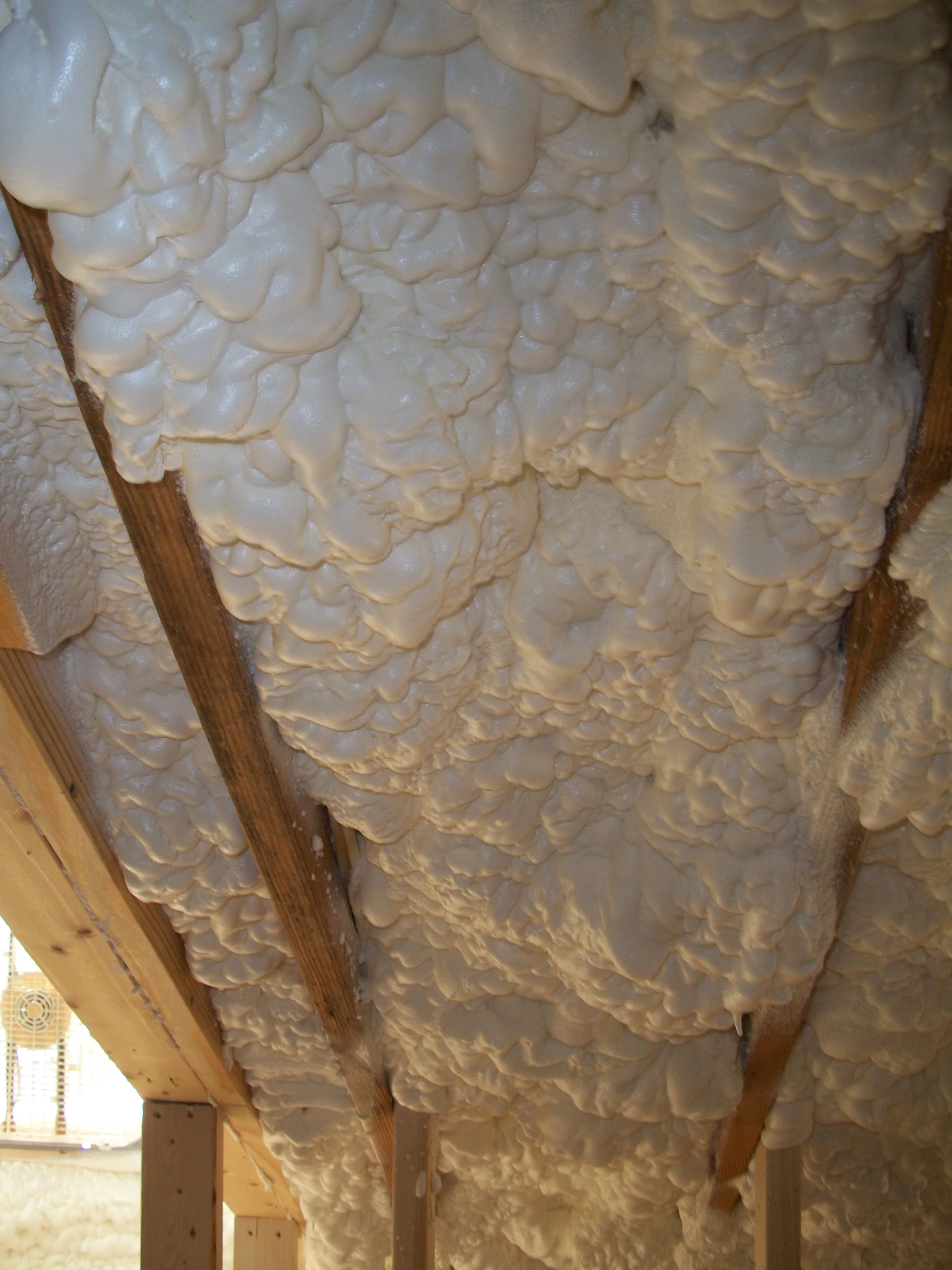
Cost-effective spray foam for attics and interior assemblies where comfort and sound control matter.
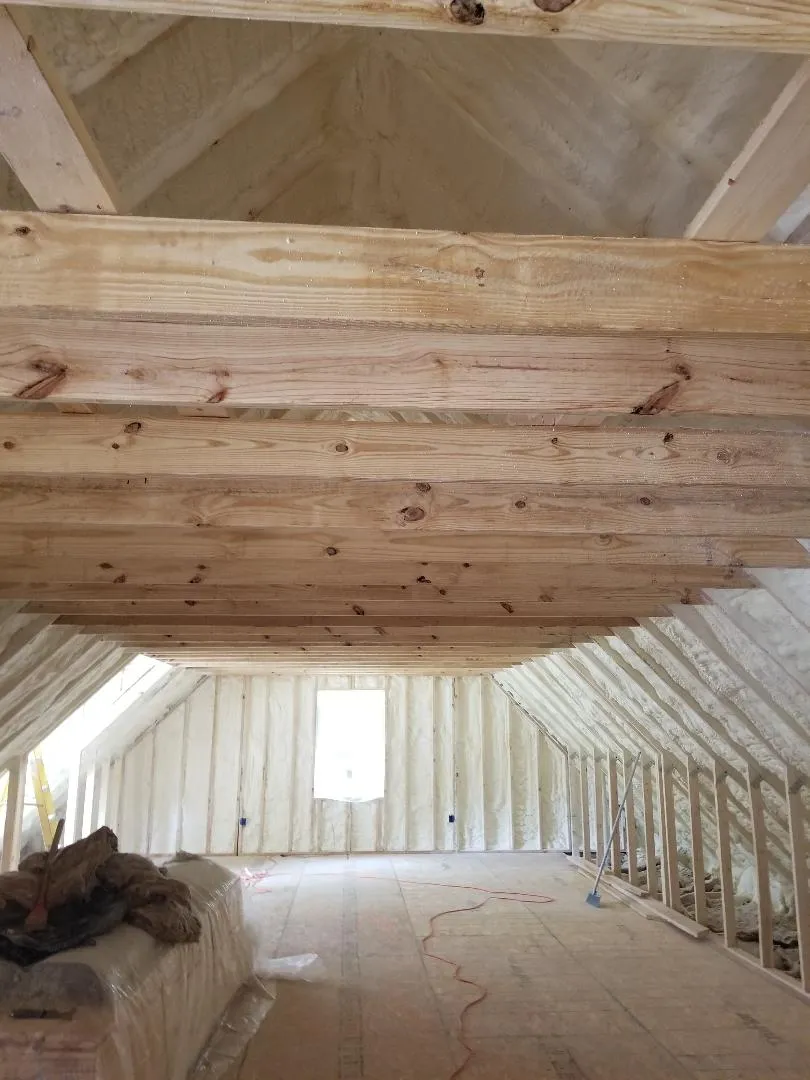
Stop losing heat through the roof. We insulate attics for year-round comfort and lower energy bills.
Get a free, no-obligation quote today.