Spray Foam Insulation Cost Per Square Foot
Per-square-foot price depends entirely on thickness. Here's the real math, by foam type — for projects across Hamilton County.
Quick Answer
Spray foam runs about $0.35 to $0.45 per board foot for open-cell and $1.25 to $1.40 for closed-cell — and a board foot is one square foot at one inch thick. So per square foot, cost scales with thickness: an open-cell attic at 6 inches runs about $2.10 to $2.70 per square foot, while closed-cell walls at 2 inches run about $2.50 to $2.80.
Square Foot vs Board Foot
The biggest source of confusion in spray foam pricing is that a "per square foot" number means nothing without a thickness. Spray foam is applied in custom thicknesses — 1 inch for an air seal, 3 inches for walls, 6 inches or more for an attic — and the cost scales directly with how thick it goes. That's why contractors quote by the board foot (area times thickness). To compare quotes fairly, always ask for the price per board foot or the per-square-foot price at a stated thickness.
How Much Does Closed-Cell Spray Foam Cost?
Closed-cell spray foam runs about $1.25 to $1.40 per board foot installed, material and labor included. At a typical 2 inches, that is about $2.50 to $2.80 per square foot. These are estimates. Your quote depends on the job, and four things set where it lands in that range.
Thickness. Every inch adds one board foot per square foot. Closed-cell usually goes on at 1 inch for an air seal, 2 inches in walls, and 3 inches on a roof deck.
Job size. Larger jobs usually price toward the low end of the range, and small jobs toward the high end.
Access. Tight crawl spaces, high ceilings, and finished rooms that need masking take more labor.
Surface prep. Foam has to bond to clean, dry wood, block, concrete, or metal, so wet or dirty surfaces need work before we spray.
For example, 1,000 square feet of wall at 2 inches is 2,000 board feet, an estimated $2,500 to $2,800. For a firm number, send us the square footage, where the foam goes (walls, roof deck, crawl space, or rim joists), and the thickness if you know it, and we'll quote it.
Cost Per Square Foot by Thickness
| Feature | Open-Cell ($/sq ft) | Closed-Cell ($/sq ft) |
|---|---|---|
| 1 inch (air seal) | $0.35 - $0.45 | $1.25 - $1.40 |
| 2 inches (walls) | $0.70 - $0.90 | $2.50 - $2.80 |
| 3 inches (roof deck) | $1.05 - $1.35 | $3.75 - $4.20 |
| 6 inches (attic, open-cell typical) | $2.10 - $2.70 | — |
1 inch (air seal)
Open-Cell ($/sq ft)
$0.35 - $0.45
Closed-Cell ($/sq ft)
$1.25 - $1.40
2 inches (walls)
Open-Cell ($/sq ft)
$0.70 - $0.90
Closed-Cell ($/sq ft)
$2.50 - $2.80
3 inches (roof deck)
Open-Cell ($/sq ft)
$1.05 - $1.35
Closed-Cell ($/sq ft)
$3.75 - $4.20
6 inches (attic, open-cell typical)
Open-Cell ($/sq ft)
$2.10 - $2.70
Closed-Cell ($/sq ft)
—
Cheaper Per Inch vs More Per Inch
Open-Cell (lower cost per inch)
Pros
- About a third the price of closed-cell per board foot
- Full air seal at the thicknesses attics and walls use
- Best value for large areas like attic rooflines
Cons
- Lower R-value per inch (R-3.6), so it needs more thickness
- No moisture barrier — not for crawl spaces or below grade
Closed-Cell (more cost per inch)
Pros
- Highest R-value per inch (R-6.5), so thin applications hit high R-values
- Built-in moisture barrier for crawl spaces, rim joists, and metal
- Adds structural rigidity to the assembly
Cons
- Roughly three times the per-square-foot cost at the same thickness
- Overkill for dry interior spaces where open-cell performs fine
How to Estimate Your Square Footage
To estimate a job, start with the area you're covering. For walls, multiply the perimeter by the wall height. For an attic or ceiling, use the footprint of the space. Multiply that area by your target thickness in inches to get board feet, then multiply by the per-board-foot rate. The cost calculator does this math for you in seconds — enter your dimensions and it returns a board-foot estimate and a price range.
Our Verdict
Ignore any "per square foot" number that doesn't state a thickness — it isn't a real quote. Decide the foam type and target R-value first, and the per-square-foot cost follows from there. Use the cost calculator to turn your dimensions into a price range, or read How Much Does It Cost to Spray Foam a House for project-level budgets.
Frequently Asked Questions
It depends entirely on thickness and foam type. Open-cell runs about $0.35 to $0.45 per board foot (so $2.10 to $2.70 per square foot at a typical 6-inch attic application), while closed-cell runs $1.25 to $1.40 per board foot ($2.50 to $2.80 per square foot at 2 inches). Always tie the price to a thickness.
At the same thickness, closed-cell costs about three times open-cell because it's denser, delivers nearly double the R-value per inch, and acts as a moisture barrier. You use it where those properties matter — crawl spaces, rim joists, metal buildings — not for general interior insulation.
Yes. The rates here are all-in installed prices covering foam material, labor, equipment, and standard overspray. They are not material-only figures, so the number you see is close to what you'd actually pay for a straightforward, accessible application.
It depends on the application: 1 to 2 inches of closed-cell for an air seal or rim joist, 2 to 3.5 inches for walls, 6 to 10 inches of open-cell for an attic roofline, and 2 to 3 inches of closed-cell for a crawl space. Indiana code calls for R-49 in the attic, which is about 13.5 inches of open-cell.
Related resources
Related Services
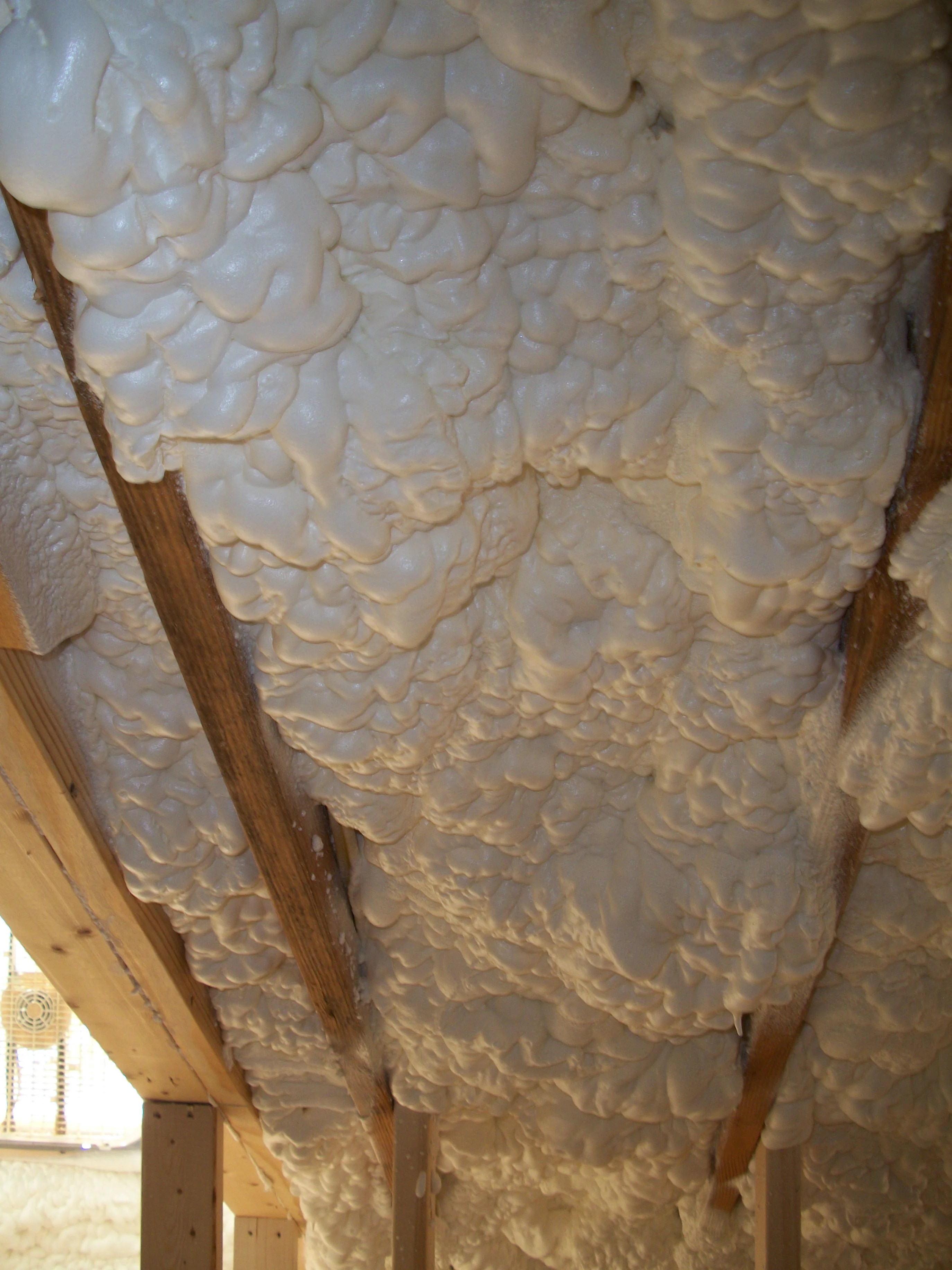
Open-Cell Foam
Cost-effective spray foam for attics and interior assemblies where comfort and sound control matter.
- $0.35 to $0.45 per board foot installed, against $1.25 to $1.40 for closed-cell
- Noticeably quieter, reduces sound between rooms and from outside
- Great for attics, interior walls, and bonus rooms
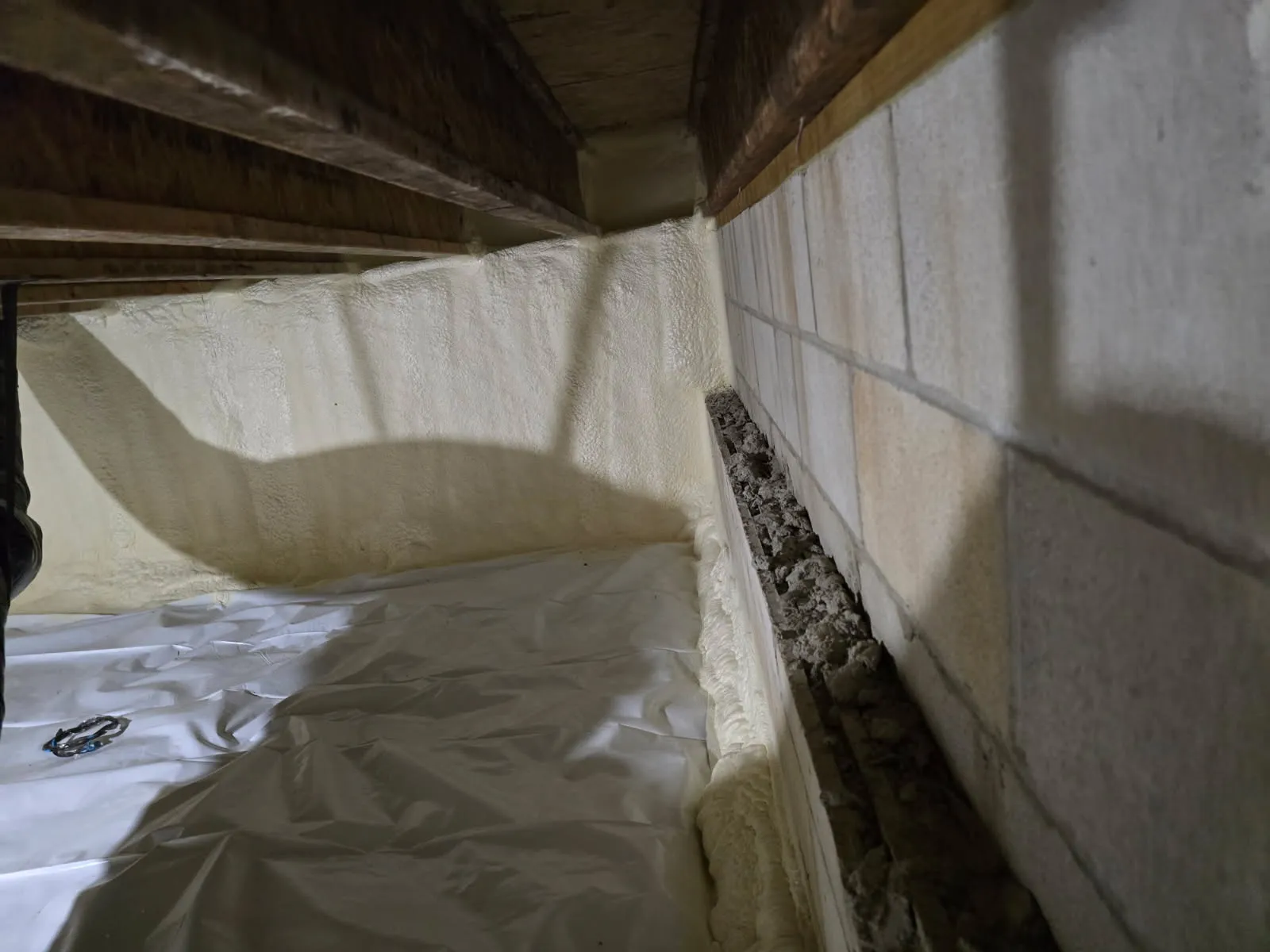
Closed-Cell Foam
High R-value insulation with moisture resistance for crawl spaces, basements, metal buildings, and demanding envelopes.
- R-6.5 per inch initially, R-6.0 to R-6.5 aged (ASTM C518)
- Acts as a vapor barrier
- Won't absorb water — ideal for moisture-prone areas
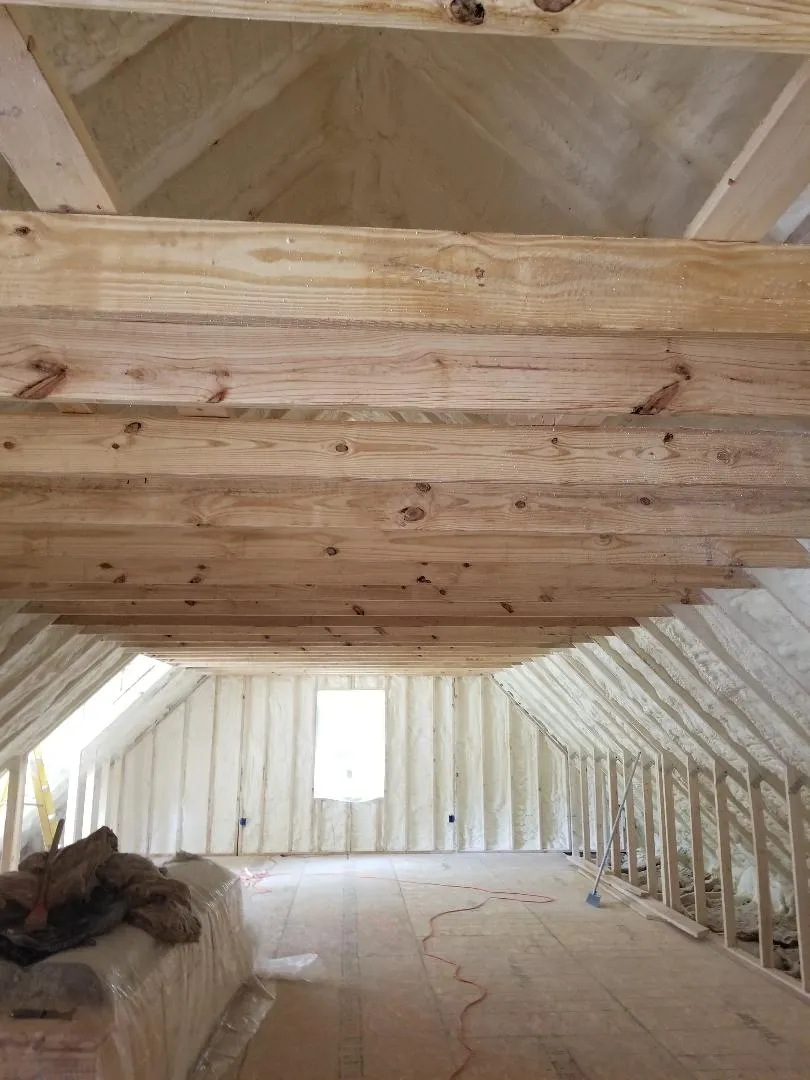
Attic Insulation
Stop losing heat through the roof. We insulate attics for year-round comfort and lower energy bills.
- Reduce heating and cooling costs immediately
- Prevent ice dams in winter
- Create usable conditioned attic space